

















♫ But the plan won’t accomplish anything
If it’s not implemented…♫
Lyrics, music and recorded by Built to Spill.

(image used pursuant to Creative Commons CC0 licence)
There are many questions to ask yourself and to think about before you reach your decision as to whether or not you would like to open a law practice. In talking to other lawyers, they will have some very helpful questions that will be very insightful and provide guidance as to whether you are making the right move or not. Owning a law practice is a huge responsibility, so you want to be very sure of what you are getting yourself into. You want to make sure that you are ready willing and able to do what it takes, and most importantly, you have what it takes to run that legal practice.
Ask yourself – are you are a good decision maker? Part of owning your own business means that you have to be that voice of reason and the ultimate decision maker. The buck, as they say, stops with you. You have to be the one to see that the best interests of your clients are always first and foremost. You also need to do what is best for both your clients, as well as for the practice.
Ask yourself: are you organized enough to run the business? You need many skills including a high degree of organization in order to be successful. This does not mean that you necessarily have to be equipped with those skills yourself. It is quite acceptable to hire someone to do tasks on your behalf, as long as they are going to effectively get the job done. So if that means hiring an extra secretary and an accountant, then so be it. But you are the one doing the management for the practice and as such you are ultimately responsible for everything that happens in your practice.
Ask yourself if you are willing to sacrifice what it takes to properly run your practice? You will be putting in long hours and as a result, have much less of a social life when you are starting a new practice, at least at first. You are going to want to dedicate your time concentrating on your new firm – managing it, marketing it, checking the finances and all that. You need to realize that when a person opens a new law practice, it does take away some of the time that they have with their family and loved ones. You have to be sure that this sacrifice is something that you have thought through, and accept and that your family is willing to make their own sacrifices as well.
Once you have mentally prepared yourself to run a busy law practice, there are more things to think about. You have to organize your office! After carpet and wallpaper combinations are worked out, client seating is considered, office equipment ordered and qualified staff are recruited the legal professional’s office is open for business. Bookkeeping must be done and cheques written.
As time passes, increase in business volume strains the practitioner. Even though managerial ability should be increasing, there is no time to manage effectively. Gone are the days when legal professionals handled every aspect of the day-to-day business. The accountant says business has increased but profits are down. Staff members sometimes do not get along. Information systems do not break out pertinent details of the business. The expensive marketing costs do not seem to be hitting the mark. The community begins to wonder why this educated and apparently capable individual never seems to support enough local projects. At the end of the day, there is very little time for considering the business, let alone family. Often the step overlooked when building a new practice is to develop a practical business plan from the outset.
Planning is perhaps the fundamental function of a manager. It requires understanding the components of a business and how they are interconnected. Planning begins with understanding the value a practitioner brings to their client and how best to satisfy the client’s needs. There is no better use of your time before you open your new practice than planning what it is going to look like, how it is going to operate, how it will be financed, what tools and technologies will you incorporate into your workflows and how will you manage to find time for yourself in order to avoid burnout.
Having a well drafted strategic business plan at hand means that you have a roadmap that governs not only the business direction in which you wish to proceed, it also serves as a governing document, guiding your efforts towards the clients, files and type of practice that you wish to have. It serves as the place where you have listed your business goals (in both qualitative as well as quantitative terms) and when you expect to reach them. It is an analysis of your business from many angles, including how to run the practice (Management), how to reach your chosen markets (Marketing), what systems you will need to make your practice work (Technology) as well as how you expect to be able to raise the necessary capital to start up and run your practice (Finance).
Along the way, you must learn the systems that must be incorporated into your practice to and how to properly run them to ensure that you are practicing professionally, profitably and ethically. You must also decide the legal entity under which you will practice.
Optimally you should do all this planning by crafting a well-thought out business plan before you open your doors. That is foresight. But the plan won’t accomplish anything sitting on the shelf. You must give life to the plan and seek to implement its goals and objectives as well as monitor and evaluate the results of your efforts to make maximum use of your plan.
After all your plan won’t accomplish anything unless it is implemented.
(posted concurrently on tips.slaw.ca)
♫ So put me on a highway
And show me a sign
And take it to the limit one more time…♫
Lyrics and music: Don Henley, Randy Meisner, Glenn Lewis Frey, Donald Hugh Henley, recorded by The Eagles. Thanks Glenn for all the great music.

(image by Wade M – CC BY-SA 2.0 licence)
This is a new year’s resolution of a different sort. All of us resolve to get healthier, to live better lives and to do better this year than last. How many of us resolve to keep our minds sharp and agile? Here are some suggestions:
- Learn something different: Take a course that is completely removed from anything else that you have done. The more you learn the better your mind learns to rework its neural pathways. Taking on the challenge of the unknown is more beneficial than doing the same thing over and over.
- Start an aerobic exercise: There is a mind-body connection and the fitter the body the fitter the mind. Keeping your cardio system strong can lessen the chance of system health concerns which in turn, reduce the effects that the passage of years take on them mind. Keeping a daily aerobic exercise has been shown to beat depression, increase mental sharpness and bolster the immune system!
- Get enough sleep: Chronic sleep depravation is linked with the build up of proteins in the brain that are linked with reduced learning and cognitive decline.
- Drink your coffee: Studies have shown that two to four coffees a day may decrease the incidence of Alzheimer’s by 30 to 60 percent!
- Eat a healthy diet: There is evidence that brain and heart health may contribute to warding off dementia. You have heard it all before: stick to fruits, veggies, whole grains, healthy fats and a moderate amount of alcohol,
- Use your mind: Don’t resort to a calculator or computer. Do it in your head (you can always check it using the tech). Math strengthens reasoning and problem solving skills.
- Don’t stop learning: Evidence shows that the best classes are those that are both mentally challenging as well as socially demanding. Photography is great here!
- Do puzzles: There is a correlation between doing puzzles and increased scores on mental tests. Hey, it can’t hurt!
- Engage: When in a situation, try to turn on all your senses. Notice scents, tastes, feelings, sounds, sights in situations around you. This activates different areas of your brain at the same time.
- Use your left *(or right)* hand: My father was ambidextrous. For those of us who are not, trying to use your “other” hand challenges your mind and senses!
- Be Positive!: Maintaining a positive attitude not only helps you mentally, it also increases your social skills!
- Be Creative: Take up writing, a musical instrument, poetry, quilting or something that challenges to come up with something original.
- Help Others: No truer statement was ever written when someone said “When you help others, you help yourself”.
- Adjust: As we age, we won’t be running marathons as we used to (or whatever it was that defined your peak). Runners World magazine advised seeking new goals as we age that adjust to our life conditions such as running different runs or seeking new running partners. Redefine what is success to you.
- Give thanks: So many people are caught up in the race of comparing themselves against others. Stop. Take a breath. Now think about what you have and how fortunate you are compared to many others. Practising gratitude can be a very affirmative habit that increases your life happiness and satisfaction.
- Carry a notebook: OK your memory isn’t as good as it used to be. So write things down in a notebook that you carry with you. Albert Einstein said: “Paper is to write things down that we need to remember. Our brains are used to think.”
- Repeat things: When you meet someone new, repeat their name several times in your conversation. This will help you remember their name. Use this for other things you need to remember.
- Meditate: A lawyer that I have known for a very long while sent me a CD with meditation music saying that this was one of the best things he has ever learned. I pass his advice on to you.
- Ask for Help: Who said we need to do it all ourselves? Lawyers don’t want to seem incapable; my advice: give it up. All of us can’t possibly learn everything we need to learn in life. Mentors are worth their weight in gold.
All of us age – that is inevitable. The effects of aging however, are (somewhat) optional. By exercising our mind, we are encouraging it to stretch and in effect, challenging it to take it to the limit one more time.
♫ We made our resolution for our brand new year:
No more letting days go by…♫
Lyrics, music and recorded by The Limousines.

So many of us resolve to do things better in the New Year even if we don’t make formal New Year’s Resolutions. Problem is that good intentions die hard. How can you increase your chances for a positive change and outcome? Here are a number of suggestions put forward to increase your chances for a real positive change:
- Start Small: Rome wasn’t built in a day and changes take time. By starting with a small change you can reap the benefits of achievement early and reinforce the knowledge that change is attainable.
- Start with One Goal: If your list is as long as your Christmas gift list, chances are you will get discouraged with the daunting nature of what you have taken on. Change is hard: Don’t overwhelm yourself.
- Slippage is Inevitable: Perfection is an abstract concept. By picking yourself up after a wee break, you can get yourself back on track.
- Choose New Goals: Avoid trying to achieve the goals that you previously set that may not have worked. Giving yourself a fresh goal can be invigorating and empowering.
- Keep Working at It: Change is a process and processes take time. Babies learn to walk by taking tiny steps. But they lead to big things.
- Seek Support: Don’t do it alone. Friends and family can be the positive reinforcement that you need and help get you through a dark spot.
- Reward Yourself: Reward behaviour to celebrate your success!
- Keep Trying: Keep at your new behaviour until it starts becoming part of your routine and personality.
Most of all don’t give up! We all know that change is hard but determination can overcome resistance. You made your resolution for the brand new year; now no more letting days go by!
(published concurrently with tips.slaw.ca)
♫ And if you don’t love me now
You will never love me again
I can still hear you saying
You would never break the chain…♫
Lyrics and music by: Stevie Nicks, Lindsey Buckingham, Christine McVie, John McVie, and Mick Fleetwood, records by Fleetwood Mac.

In this third and final instalment of the 2016 prognostications, we have predictions from:
- Sharon Nelson and John Simek
- Sheila Blackford
- André Coetzee
- Ben Stevens
- Brian Mauch
- Nikki Black
- Stephen Gallagher
- Tom Spraggs Jr
- Deb McMurray
- Mitch Kowalski
- Dave Bilinsky
Sharon Nelson and John Simek:

Predictions for Dave Bilinsky
- Encryption of confidential e-mail will surge – it’s no longer “too hard” or “too expensive” – and it may be ethically required (see 2015’s groundbreaking ethical opinion from Texas). We were busy all year installing ZixCorp (which seems to be favored by many law firms) and expect to be even busier doing it 2016.
- Because security is now paramount on the minds of so many lawyers, we have already seen a great deal of interest in Open Whisper Systems’ Signal encryption for use with voice and text communications via smartphone. Edward Snowden and cybersecurity guru Bruce Schneier are both fans – and we’re starting to see lawyers taking a serious look at this – it began hitting the listserves in 2015 and will likely grow in popularity. The caveat is that both parties to the communication must be using it.
- As we write, it has been announced that LegalZoom is buying a UK law firm. Look for some serious alternative business structure lobbying by LegalZoom, Avvo and others in the coming year.
- More and more large firms are acquiring the ISO 27001 certification – 27 of the AmLaw 100 firms have it now. This is not for the solo/small market but you will probably see a lot of those firms self-certify that they are compliant with the NIST small business data security standards.
- The Rise of the Machines seems more and more inevitable as Ross, the Superintelligent Lawyer (and ‘son’ of IBM’s Watson) has gotten ‘a job’ at Dentons and is being deployed by other large firms on a trial basis as well. A lot of paralegals and first/second year associates are likely going to be replaced by Ross and his progeny – if not in 2016, then soon thereafter.
- We have been surprised by how many lawyers adopted and fell in love with Microsoft’s Surface Pro 3 (us too). We are now seeing, for the first time, enterprise deployment of the Microsoft Surface Pro 4 – we expect that trend to continue. Folks are outfitting their firms with the a Surface Pro 4, a docking station, a full size keyboard, and two flat panel monitors. Grab it and go and you have a fully functional laptop in a tablet form. We don’t see the Surface Book achieving the same success – once you remove the keyboard and effectively have a tablet, the battery life plummets to about 3 hours. That’s a non-starter. Note that we have taken the Surface Pro 3 on cruises, European vacations, etc. and been fully functional. We see a bright future for the Surface Pro 4.
- Windows 10? Many waited (prudently) to install it, but almost everyone will have it by the July 29, 2016 deadline to install it for free. Look for all the compatibility and bug issues to be resolved by early 2016. This will become the workhorse that Windows 7 was in its time.
About John and Sharon:
Sharon D. Nelson, Esq.
Sharon D. Nelson, Esq., is the President of Sensei Enterprises, Inc., a digital forensics, information security and information technology firm in Fairfax, Virginia.
Ms. Nelson is the author of the noted electronic evidence blog, Ride the Lightning and is a co-host of the Legal Talk Network podcast series called “The Digital Edge: Lawyers and Technology” as well as “Digital Detectives.”
She is a frequent author (fourteen books published by the ABA and hundreds of articles) and speaker on legal technology, information security and electronic evidence topics. She was the President of the Virginia State Bar June 2013 – June 2014 and a past President of the Fairfax Law Foundation.
She may be reached at snelson@senseient.com
John W. Simek
Mr. Simek is the Vice President of Sensei Enterprises, Inc., an information technology, digital forensics and information security firm located in Fairfax, VA. Mr. Simek has a national reputation as a digital forensics technologist and has testified as an expert witness throughout the United States. He holds a degree in engineering from the United States Merchant Marine Academy and an MBA in finance from Saint Joseph’s University.
Mr. Simek holds the prestigious Certified Information Systems Security Professional (CISSP) and EnCase Certified Examiner (EnCE) certifications in addition to multiple other technical certifications. He currently provides information technology support to hundres of Washington, DC area law firms, legal entities and corporations. He is a co-host of the Legal Talk Network podcast Digital Detectives. He is a frequent author (twelve books published by the ABA and hundreds of articles) and speaker on legal technology, information security and electronic evidence topics.
He may be reached at jsimek@senseient.com.
Sheila Blackford:

Outsourcing in 2016 will continue, with more firms reaching out to non-traditional sources of legal assistance.
Don’t be afraid of hiring talent with different skill sets if they are compatible with your needs, especially if accompanied by attractive personality attributes.
![Digby[1]](http://thoughtfullaw.com/wp-content/uploads/2015/12/Digby1-225x300.jpg)
Digby consistently displays a remarkable accuracy rate in catching manuscript errors while maintaining an upbeat cheerful nature that fosters a pleasant work environment. I don’t think writing Trust Accounting in One Hour for Lawyers would have been as easy an undertaking without his support. Here he is checking things before sending the manuscript to ABA Law Practice Division Publications Board.
About Sheila:
Sheila Blackford is an attorney and has been a practice management advisor for the Oregon State Bar Professional Liability Fund since 2005, providing confidential practice management assistance to Oregon attorneys to reduce their risk of malpractice claims and ethics complaints. She is the former Editor-in-Chief of Law Practice, published by the ABA Law Practice Division and is co-author of Paperless in One Hour For Lawyers and a contributing author to the Flying Solo, 5th Edition both published by the ABA Law Practice Management Division. Her book Trust Accounting in One Hour for Lawyers is scheduled for publishing in 2016. She is a contributing author to the Fee Agreement Compendium published by the Oregon State Bar. Follow her blog Just Oregon Lawyers.
André Coetzee:

Here some predictions for 2016:
- The demand on bandwidth is going to continue to grow exponentially due to the even higher demand for performing work online. As result there are going to be more providers providing fibre internet connections at a reasonable cost.
- Wireless cellular providers are going to continue to invest in ways in making their networks faster too as well as increasing their reach into more rural areas. This is going to allow us to do even more on our Smart Devices.
- Adopting a client experience approach as opposed to a client satisfaction approach. The client experience is a holistic approach and ensures that all the functional areas within your firm consistently give the same experience to the client i.e. if your client is dealing with the receptionist or the managing partner, an associate or a paralegal the client experience will be the same. The client experience approach also deals with how\who you hire, how you treat your vendors etc. Adopting a client experience model is not easy to achieve, however can reap high rewards e.g. increase in new business\clients, client retention, happier staff, loyal vendors etc.
- Digital dashboards which allow Partners to view predetermined Key Performance Indicators to see how their firm is performing real time. The data will be pulled from multiple different data sources e.g. a legal application\s, a productivity application\s etc.
- The amount of data is increasing exponentially and hence tools\software that gives us quick and easy access to the large volumes of data we have whether it be on your server, in the cloud, computer at home etc. Also being able to add more storage on demand.
- More digital automation than we currently see today to improve, enhance, create new processes and maybe even create completely different business models i.e. using a combination of these technologies, mobile, cloud, data analytics, artificial intelligence etc. to provide better more customized services to clients quicker
- Being more nimble with regards to services and products provided to clients.
- Digital assistants performing mundane data entry e.g. names, addresses etc.
- Virtual reality is going to improve and holographic movies are on their way – saw a demo video of holographic technology where there were Rhinos and cheetahs walking around a shopping mall India –it was incredible.
- Simpler and more user friendly digital signature technology, improving processes and efficiency.
About André:
André Coetzee, MBA, PMP, BA, H.Dip.Ed.
(Masters in Business Administration, Project Management Professional, Bachelor of Arts, Higher Diploma in Education)
Andre Coetzee is a Director and a founding partner of i-worx, a Premium Hosting Service Provider for law firms. Andre is constantly researching and exploring new and better Hosted IT services with the goal of continuously providing legal firms a premier IT experience. As a result i-worx has developed a reputation for delivering innovative Hosted IT services to law firms, including Hosted Desktops, Hosted Email and secure file sharing with exceptional personalized service. For more information or to learn more about how hosted services could benefit your Firm, call 604.639.6300 or email andre@i-worx.ca.
Ben Stevens:

I believe that more attorneys will begin using the Apple Watch and integrating it in their practices and their lives. For instance, trial attorneys may realize that they can subtly receive messages from their associate regarding key points while questioning a witness. Further, the health integration is also an easily overlooked feature that could encourage attorneys to spend a little more time standing or moving around their office instead of sitting behind a desk all day.
About Ben:
Ben Stevens is a South Carolina family law attorney, who is a Fellow in both the AAML and the IAML. He has published The Mac Lawyer legal technology blog since 2006, and he co-founded the Macs in Law Offices (MILO) forum in 2007, which has almost 5,000 members today.
Brian Mauch:
My predictions for 2016 are:
- Small firms will adopt document management systems like Worldox in record numbers. The volume of documents and emails that firms need to manage is increasing exponentially each year.
- Android-based smartphones will overtake iPhones as the most popular choice for lawyers replacing their smartphones next year. iPhones had overtaken Blackberries a few years ago, and now its Android’s turn.
- Dual monitors for lawyers and staff have become the standard setup for many firms. The percentage of firms that have adopted multiple monitors will soon exceed more than 50%.
About Brian:
Brian Mauch is CEO of BMC Networks, a Vancouver-based outsourced IT provider that specializes in law firms. Brian obtained both law and commerce degrees from the University of British Columbia, and then combined his education with his passion for computers to form BMC Networks in 1997.
Nikki Black:

In 2016, smartwatch use by lawyers will start to take off.The biggest benefit of this type of technology is that it will help lawyers untether from their smartphones and filter out all but the most important, need-to-know information.
Cloud computing use by lawyers will also increase now that the technology and the legal cloud computing providers are becomingly increasingly familiar. Lawyers will use it for all sorts of law office functions, including billing, time tracking,and document storage. Othes will move all of those functions to the cloud by using a full-fledged web-based law practice management software system.
By incorporating cloud computing software and other types of emerging technologies, such as smartwatches, into their practices, lawyers will be able to streamline their practices and provide better representation to their clients.
Stephen Gallagher:

What a group of authorities you have brought together once again. I do not know how I can contribute other than saying that I still think every young lawyer should read Clayton Christensen’s book, “How Will You Measure your Life?”.
In this groundbreaking and remarkably personal book, Clayton Christensen and his coauthors James Allworth and Karen Dillon put forth a series of fundamental questions everyone asks themselves at some point in their lives:
- How can I be sure that I’ll find satisfaction in my career?
- How can I be sure that my personal relationships become enduring sources of happiness?
- How can I avoid compromising my integrity—and stay out of jail?
Using lessons from some of the world’s greatest businesses, applying his theories about disruptive innovation, and drawing personal examples from his own life, Christensen and his coauthors seek to answer these questions by presenting a way for each of us to think about our lives and find the satisfaction, happiness, and direction necessary for a successful and happy future.
I’ve admired Clayton Christensen for some time now. He is among other things a devout Mormon. He writes that he is very grateful for several early decisions he made in his career. In a speech to Brigham Young University–Idaho Devotional he said that one of his decisions was made at Oxford. He told his audience that he is 6’8″, so he tried out for and made the Oxford Varsity basketball team. They turned out to have a great team. He said that those guys were the best friends that he ever known in his life, and they went through the regular season and were undefeated.
Then they went into the British equivalent of what we would call the NCAA basketball tournament. They marched through each of those games in a fairly easy fashion until they came to the final four. When he looked at the schedule he realized that the final basketball game was scheduled to be played on Sunday in Bristol. He was devastated because he had made a commitment to himself when he was 16 that he would never play basketball on Sunday.
He went to the coach truly conflicted. The team had worked their guts out all season long and Clay was the starting center, and he wanted to help them win this goal that they had all practiced for. And yet he had made this commitment to Heavenly Father and to himself. So he told his coach about this conflict and asked him what he should do. The coach was just incredulous. He said, “We have worked so hard for this. I can’t believe you’re even asking.” He said, “I don’t know who your god is, but mine, let me tell you what he’s like. He lets us by on things like this. And Clay, just this once, just this once, play this game and then go off and do whatever you have to do with your god and make peace with him and never do it again.”
Well, then the team played in the semi-final game without Clayton, and they won. Clayton said that proved that he wasn’t that important to the team. As time has passed, Clayton felt that this decision looms as one of the most important decisions he had ever made because it would have been very easy to say, in general, keeping the Sabbath day holy, but in his particular extenuating circumstances, it’s okay, just this once. And the reason that decision has proven so important to Clay is that his whole life has turned out to be an un-ending stream of extenuating circumstances, and had he crossed that line just that once, then the next time something came up that was so demanding and critical, it would have been so much easier to cross the line again.
I share this with young lawyers who are starting their careers, They will be constantly bombarded with “extenuating circumstances”. The future holds many challenges and the winners in this fight will be ball players who refuse to compromise themselves.
About Stephen:
Stephen P. Gallagher, is a principal at LeadershipCoach.us, an executive coaching consultancy that works with senior lawyers, practice group leaders, and other “high potential” individuals. Stephen is an Organizational Development professional that provides lawyers and law firms with a broad range of coaching services directed at facilitating positive change.
Stephen holds a Master of Science degree in Organizational Dynamics (MSOD) from the University of Pennsylvania. He has more than 30 years of experience in working exclusively with lawyers.
Stephen is also certified as a Retirement Options coach, and as such, he helps individuals focus on the critical aspects of non-financial retirement planning.
Based in Philadelphia, PA, Stephen’s practice is committed to partnering with clients in a creative process that inspires them to maximize their personal and professional potential and at the same time enhancing professional and personal satisfaction in achieving a more balanced life.
Stephen has conducted strategic planning programs with the American Bar Association, state and local bar associations, as well as The Law Society of England and Wales, and The Law Society of Scotland. In addition to coaching lawyers, Stephen is an adjunct faculty member in the Marketing department at St. Joseph’s University in Philadelphia.
Stephen has written extensively in areas as diverse as The High Performance Lawyer, Yesterday’s Strategies Rarely Answer Tomorrow’s Problems, and Winding Down the Law Practice, Planning for Retirement He has designed and facilitated numerous bar association and law firm retreats dealing with the changing nature of law practice. The National Association of Bar Executives (NABE) published Stephen’s two part articles, LPM Programs: an Inside Look and Bar Associations in Transition II. In December 2014, Bar Leaders, a publication of ABA Division for Bar Services published another of his articles, The rise of the laptop lawyer? Senior members, lonely bowlers, and a way forward.
Stephen P. Gallagher: sgallagher@leadershipcoach.us
Thomas Spraggs Jr.:

The market will continue to compel the legal community to search for technology solutions that facilitate the effective delivery of legal services while simultaneously attaining a high level of efficiency.
One of the ways to do this is with Customer Relationship Management software, otherwise known as “CRM”. CRM software represents a useful tool for managing a company’s interactions with customers. CRM attempts to analyze data about the customer’s history and allows a company to cater to their needs. It is scalable and, most importantly, made more accessible through cloud based technologies. For example, www.salesforce.com now offers a cloud solution so that a client’s interactions with a company can be tracked from beginning to end and in perpetuity. CRM can also simply take the form of a contact manager system that integrates emails, documents, jobs, faxes, and scheduling for individual accounts.
Wouldn’t it be amazing to know where your referrals were coming from and having the ability to view a customer’s data and company interactions on an electronic dashboard?
I predict that 2016 will be one of the most innovative years for lawyers in general who apply technology and this may be the year that CRM software gains popularity to foster business relationships and retain satisfied clients.
About Thomas:
Thomas has applied innovative approaches to practice management and a progressive approach to technology in leading Spraggs & Co to become a highly respected, award-winning law firm. Thomas has earned an LLB, an LLM, and an MBA, and he is a co-founder of Lawly (www.lawly.com) a technology start-up supporting access to justice. He is a member of the law societies of British Columbia, Yukon and Alberta and a volunteer with the British Columbia Law Institute in his capacity as Director and Treasurer. He also serves as co-chair to the newly-formed Canadian Bar Association Tri-Cities/New Westminster Civil Litigation Section in addition to working as a Director of Douglas College and Vice Chair of the Board of Directors.
Deborah McMurray:

There is this phenomenon called “The Law of the First Impression.” For law firms and lawyers, your buyers are checking you out long before you know they are. They go through 57% of the purchasing process before even speaking to you – vetting for credibility, popularity and efficacy.
For too long, lawyers have ignored that buyers of legal services make their purchasing decision on two levels. When buyers are creating their short list, they are making a technical or intellectual evaluation of things they can check off a list – expertise, relevant experience, geographical suitability, fee arrangements, industry knowledge, and so on. But when they are making their buying decision, where they are choosing the one lawyer or firm to hire, they are making an emotional decision – do I like this person, do I trust her, how would I feel getting stuck on the tarmac for 4 hours sitting next to him?
Lawyers have to win the short list test to even be considered for purchase – and most of this evaluation is done (at least 57%) before the lawyers even know about it. I predict that lawyers and firms will finally focus on ensuring that their best experience is readily available – that their best client stories are succinct, but complete, and that this critical warehouse of move-the-needle information will be a major priority for driving new revenue.
About Deborah:
Deborah McMurray is CEO and Strategy Architect of Content Pilot LLC, a strategy, design, content and technology company. Deborah and her team specialize in award-winning design of websites and proposal centers, experience databases and other marketing technology tools, and important strategic initiatives, such as marketing department restructuring/realignment and positioning/branding campaigns. In 2008, she was inducted into the Legal Marketing Association’s Hall of Fame and in 2007, was elected as a Fellow in the College of Law Practice Management. In December 2013, she was named as one of National Law Journal’s “2013 Top 50 Legal Business Trailblazers & Pioneers.” Read her Law Firm 4.0 Blog.
Mitch Kowalski:

Predictions:
Dentons LLP has made making some predictions in 2016 very easy – it will acquire at least one firm in 2016. Beyond that however, things are very murky – but here goes:
- The Prairie provinces have wisely banded together to tackle regulatory reform including ABS, this month. By this time next year they will boldly move forward to implementation;
- The Prairie provinces will further band together under one law society, instead of three;
- Nova Scotia will implement regulatory reforms concerning entity regulation and compliance;
- The Law Society of Upper Canada will continue to earn its reputation for lethargy and inertia. It will no longer be seen as a progressive or thoughtful institution to be followed;
- Shares in Slater & Gordon will rebound by summer;
- Ryerson’s LPP programme will continue to succeed, forcing the Law Society of Upper Canada to seriously consider abandoning the articling process in 2017;
- Ryerson will formally apply for a law school;
- TWU will win its appeal in Ontario, and the Law Society of Upper Canada will then appeal to the Supreme Court of Canada;
- Alberta will institute a pilot, online divorce process;
- BC will begin planning how to roll out its online dispute resolution for small claims court, to higher level courts.
Have a great holiday!!
About Mitch:
Mitchell Kowalski was recognized as a Fastcase 50 Global Legal Innovator in 2012, and he is the author of the critically acclaimed American Bar Association best-seller, Avoiding Extinction: Reimagining Legal Services for the 21st Century. His forthcoming book, The Great Legal Reformation, in 2016. As a former in-house counsel, and partner at one of the world’s largest international law firms, Mitch provides a seasoned and unique perspective on the redesign of legal services delivery – one that is sought-after around the World. As a visiting professor at the University of Calgary Law School, he researches/teaches innovation in the global legal services market.
David J. Bilinsky:

In looking back at my predictions for last year, I can say that the majority came true or are in the process of coming true, one clearly did not and a few are still on the ‘wait and see’ pile.
But this year I believe is starting to approach the ‘inflection point’ where new technologies and new developments are poised to bring about great change. There are several indications that suggest that this may be happening:
- I think that how we educate lawyers is about to undergo big change. No longer will students accept only ‘black letter law’ training that leaves them little prepared for the actual practice of law. Bar associations, universities and perhaps law societies are going to open up how they educate lawyers. One encouraging development is the growth of ‘incubators’ that allow young lawyers to start up with little cost and place them in an environment where they come into contact with other young entrepreneurs. This ‘mash up’ of cultures, ideas and people will help break the bubble that tends to isolate lawyers from the energy, enthusiasm and creativity that is happening in places like Palo Alto and other places. The drop in enrolment and the pressure to demonstrate that a real career lies ahead with a law degree will help bring about these changes.
- Watson and other ‘legal thinking machines’ will start to greatly transform the delivery of legal services. While many have speculated on the far-reaching power of Watson and similar AI technologies, what we haven’t given much thought to is how Watson and other AI technologies will actually deliver legal services. Will Watson work for existing firms, allowing associates and partners alike the use of enhanced legal reasoning or will they be used for the delivery of lower-cost but more routine legal services via such platforms as perhaps LegalZoom? Google’s AI platform will be a different flavour altogether and may allow the public to get answers to their legal issues by simply doing the equivalent of a Google search. These technologies stand poised to start delving at what it is that lawyers can do for clients – and do it better, faster and in all probability, cheaper.
- There will be a looming battle for the lawyer’s desktop. Developers such as CLIO, RocketMatter, Amicus Cloud, MyCase, ActionStep and others are going to continue to try to provide the equivalent of the ‘holy grail’ to the solo and small firm lawyer. The promised land will be the seamless integration of trust and general accounting (with systems that work in both the Canadian and the American tax/regulatory environments) with document management, document generation, CRM and project management and much much more. The financial dashboard that provides real time feedback on the performance of the firm is just one such aspect to these enhanced solutions.
- Security and privacy will continue to be a big concern of lawyers and law firms. Lawyers are going to demand real time protection from such malicious software as Ransomware that holds their data hostage until the desired ransom is paid.
- More jurisdictions will be watching British Columbia and the Civil Resolution Tribunal (CRT) and will be planning to launch similar initiatives to provide lower-cost ways to resolve small claims-type disputes. Once the success of the CRT has been demonstrated, expect the model to be applied to a wide-range of potential tribunals in multiple jurisdictions. This process will inevitably erode at the jurisdiction of the courts and reduce the demand for judges and judicial processes as governments seek lower-cost ways to provide services. For example, one particularly fruitful area for technology-enhanced dispute resolution will be family law. Once the CRT – technology assisted ADR model has been proven, it will be applied to help resolve disputes in multiple areas of law, empowering consumers to seek solutions themselves using the on-line tools and inevitably reducing the demand for lawyers and judges alike.
- Technology platforms will continue to evolve. Right now the hot item is the MS Surface Pro 4. I fully expect Apple to revamp their product offerings to come up with a competing platform that will keep the faithful happy. The winners will be all of us with products that work and think the way we do.
- Encryption and being able to securely communicate with clients will come under increasing attack as more ‘back doors’ are discovered such as the Juniper Networks backdoor.
- Virtual legal assistants will become more and more common along with other virtual contractors. The practice of law has been decoupled from the expensive downtown office. Lawyers can practice from wherever they can find an internet connection and a cloud-based practice management solution. Accordingly legal support providers will orient themselves to increasingly support this virtual practice of law.
- This is more of a longer-baseline prediction. Blockchain technology (the technology that underlies Bitcoin) will start to transform the world. For example, unbreakable contracts are contracts that are self-enforcing or self-executing that exist via the block-chain. This way if a company is contracted to produce 1000 widgets, they are paid by way of transfer of a fixed price from the purchaser to the vendor’s bank account each time a widget is delivered. No intermediary and no lawyer or court is required to enforce the contract. Similarly with any government registry. No need to build such a registry to securely transfer property. You can have a blockchain-based property ownership recording system. The blockchain can be used to identify the current owner of any property, to make sure that ownership is correctly transferred to a new owner on sale, to resolve disputes and to prevent fraud. Real estate, vehicles – indeed any type of traditional property ownership and transfer – can take place via the blockchain. Fraud is reduced if not eliminated. The blockchain guarantees the validity of of a transaction. Any one or indeed any entity that provides the trusted intermediary role in today’s world (read: any government registry) can be replaced by blockchain technology.
Well that is the wrap for this year. Now we have to sit back and see what indeed transpires! One thing seems to be certain..when it comes to the blockchain technology, you would never break the chain…
♫ But I won’t look back, gonna keep on walking
For I know what lies ahead…♫
Lyrics, music and record by The Oak Ridge Boys.

In this Part II of the 2016 predictions, we continue our crystal-ball gazing into the near future! In this part we have predictions from:
- Bob Denney
- Joshua Lenon
- Frank Fowlie
- Euan Sinclair
- Russell Alexander
- Nate Russell
- Michael McCubbin
- Rob Walls
- Roger Smith
- Kevin O’Keefe
..and we will have further predictions in Part III!
Bob Denney:
The winds of change that have been buffeting the legal profession, not only in the United States and Canada but also world-wide, will intensify. These will be some of the strongest gusts:
- The number of non-law service providers will continue to increase as will the number of services they provide at less cost than firms can afford to charge.
- Legal departments in corporations and non-profit organizations will continue to grow in size because clients will keep more legal work in-house since it is less costly and can be managed more efficiently.
- The large international firms will continue to grow in size as they merge-in other firms but the total number of practicing lawyers in firms and legal departments will continue to decrease and fewer people will enter the profession.
- Non-lawyers with backgrounds in business, marketing and technology will continue to play a greater role in the management and operations of law firms.
- The Big Four Accounting firms will continue quietly but steadily building their legal services divisions in the countries that have authorized multi-disciplinary practices (MDPs), Britain, Australia and Mexico. However, rather than trying to build full-services practices, they will continue to concentrate on areas of law that complement their existing services such as immigration, which fits with expatriate tax work, labor which fits with human resources consulting and compliance, commercial contracts and due diligence.
About Bob:
For more than 30 years Bob Denney has been regarded as a leading authority on strategy, leadership and management for law firms throughout the United States and parts of Canada. He is a Fellow in the College of Law Practice and was one of the first inductees into the Legal Marketing Association’s Hall of Fame.
Joshua Lenon:

This is the year things open up. We’ve seen firms of all sizes adopting technology on one hand; on the other are firms dragging their feet. This is the year that those that invested in technology and the process breakaway. We’ve already seen foreshadowing of this in various surveys and metrics. By the end of 2016, there will be clear indicators of firms excelling precisely because of their adoption of technology.
About Joshua:
Joshua Lenon is an attorney admitted to the New York Bar. He studied law at St. Louis University School of Law, obtaining a Juris Doctorate and a Certificate in International and Comparative Law.
During this time, Joshua clerked for the Missouri Attorney General, helping prosecute discrimination claims on behalf of Missouri citizens.
Joshua also studied European Union Law at the University of Georgia School of Law’s Brussels Legal Seminar.
Joshua has since helped legal practitioners improve their services, working for Thomson Reuters’ publishing departments in both the United States and Canada.
Joshua currently serves as Lawyer-in-Residence for Clio, providing legal scholarship and research skills to the leading cloud-based practice management platform.
Frank Fowlie:

I think the one prediction I would make is the courts adopting the ‘Right to Be forgotten”. The European Union Court of Justice was the first to make such a ruling, and Japan has done the same. The British Courts have recently held that if something was covered by the EU ruling, it ought to be applied to the whole internet, and not just EU based search engines.
About Frank:
Dr. Frank Fowlie is presently the Ombudsman at the International Organization for Migration in Geneva. He was previously the inaugural CEO of InternetOmbudsman.Biz. In addition, Frank Fowlie was the inaugural Ombudsman at the Internet Corporation for Assigned Names and Numbers(ICANN).
ICANN is the agency which administers the global domain name system which serves as the backbone for the Internet. He served as the Ombudsman from November 2004 to January, 2011.
Euan Sinclair:

Predictions for 2016:
Legal Project Management as a concept is only growing. As I have developed my technology law practice in 2015, it is very apparent to me that clients are increasingly cost sensitive and look for lawyers to actively manage costs. I spend a good portion of my time preparing and updating budgets and Gantt charts for clients. Lawyers increasingly need to develop business skills like these to survive.
The more-for-less philosophy is becoming entrenched with in house counsel. It seems that if law firms won’t innovate, then clients will build innovative in-house teams. The combination of innovative in-house legal teams and automated processes may prove very tricky for law firms who may lose a significant portion of the bread-and-butter routine work they presently carry out for clients.
The rise of the procurement department as the purchaser of legal services and the professional law firm CEO will probably happen towards the end of the decade. A new risk to add to the radar is the incursion of the big four accountancy firms into the legal sphere. This is entirely self-inflicted since lawyers refuse to act on anything other than a narrow mandate. Lawyers with business skills, offering holistic advice, can help to reverse this trend.
About Euan:
Euan Sinclair was an in-house commercial lawyer for a number of years in Scotland before moving to BC in 2011 to become Director, Knowledge Management at Lawson Lundell LLP (all views expressed are his own). He also holds an MBA from Edinburgh University and a LLM in IT law from Strathclyde University, where he was taught by Professor Richard Susskind, amongst others. Euan called at the BC bar in 2014 and specializes in technology law. He is a LLM (Business Law) candidate at Osgoode Hall Law School.
Russell Alexander:
And now for something completely different
2016 Prediction (and hope): We will continue to see More Judicious Quips from Superior Court Justice Quinn
Justice Quinn has a reputation for ‘telling it like it is’ when he writes his Judgments. Sitting as a Superior Court Justice in the Province of Ontario, Justice Quinn has adjudicated many cases; some of his notorious quips include the following:
Catherine Bruni v. Larry Bruni
- “Here, a husband and wife have been marinating in a mutual hatred so intense as to surely amount to a personality disorder requiring treatment.”
- This hatred has raged unabated since the date of separation. Consequently, the likelihood of an amicable resolution is laughable (hatred devours reason); and, a satisfactory legal solution is impossible (hatred has no legal remedy).”
- “Catherine and Larry were married on October 7, 1995. If only the wedding guests, who tinkled their wine glasses as encouragement for the traditional bussing of the bride and groom, could see the couple now.” And then later in an endnote “I am prepared to certify a class action for the return of all wedding gifts.”
- The legal system does not have the resources to monitor a schedule of counselling (nor should it do so). The function of Family Court is not to change people, but to dispose of their disputes at a given point in time. I preside over a court, not a church.”
- “I come now to the issue of spousal support, historically the roulette of family law (blindfolds, darts and Ouija boards being optional).”
- “It is likely that, in the period 2004-2006, Larry was having one or more extramarital affairs. Interestingly, Larry’s father was married five times, in addition to going through several relationships. Perhaps there is an infidelity gene.”
- “The New Shorter Oxford English Dictionary defines “dickhead” as “a stupid person.” That would not have been my first guess.”
- “On another occasion in July of 2009, Larry said to Taylor: “You put shit in this hand and shit in this hand, smack it together, what do you get? Taylor.” And the endnote “I gather that this is Larry’s version of the Big Bang Theory.”
Pirbhai Costs Decision
- “Singh was evasive as a witness. He refused to acknowledge simple factual matters. He failed miserably in making reasonably diligent efforts to provide documentary disclosure, rendering it obvious that his objective was to divulge only what he wanted the court to see. Singh lied under oath. He tendered forged documents in evidence with the intention that the court act upon them. He perpetrated a fraud upon the plaintiff and his plan was to do the same upon the court. In this trial, he was a one-man crime wave. “
Thomas v. Thomas
- The parties in this matrimonial litigation, both with a military background, came to learn that marriage “is a field of battle and not a bed of roses.”
A footnote reads:
- It is both sad and remarkable that, prior to the wedding, these highly intelligent people did not discuss if they would have children or what roles each would perform in the marriage or whether the wife would be expected to pursue a career and work outside the home. A marriage licence surely must be the easiest of all licences to obtain.
- Like many families, watching rented videotaped movies was part of their lifestyle. However, they each would rent their own movies and watch them separately. Apart from eating, sleeping and breathing they had nothing in common.
- It is quite amazing that the marriage lasted 14 years. One would have thought that, “The weakest kind of fruit drops earliest to the ground.” (Shakespeare, The Merchant of Venice, Act IV, scene i, line 115.)
Stirling v. Blake
- In the period 2001-2013, these parties (individually or together) appeared in Family Court 65 times. At the St. Catharines Court House, they are more tenants than litigants.
- [The father] is a 55-year-old, self-employed painter, sometimes likeable, frequently articulate and always passionate. He has been married, divorced and is a grandfather and, like so many of the poor souls who amble into Family Court, he has not learned from his mistakes. He is too busy perfecting them. [The father] dances to the tune of a different drummer.
- In a trial involving self-represented litigants, my expectations are low: all I ask is that they be clothed. If they can fake civility toward each other and pretend to be respectful of the court, that is a merciful bonus.
Szakacs v. Clarke
- For best courtroom adaptation of a work of fiction, the award goes to the applicant, Clarissa Olenka Szakacs, who shamelessly feigned what she thought was necessary to convince the court to circumscribe access by the respondent to their almost-six-year-old daughter.
- One could sit in Family Court for many years and not encounter such a callously conniving and mendaciously manipulative litigant. …
- At several points throughout the trial, Ms. Szakacs emphasized that she was a Christian who practiced Christian values. There must be some key pages missing from her copy of the Bible.
So our prediction (and hope) for the legal community is for Justice Quinn to keep providing insightful and colourful quips of the quirky and often sad litigants that continue to draw the ire of both the Judiciary and the legal community.
About Russell:
Russell obtained his undergraduate degree from the University of Toronto and his law Degree from Osgoode Hall Law School. He founded Russell Alexander Family Lawyers in 1998, following his admission to practice law. The firm’s first location was opened in Lindsay, Ontario in 1998, followed by the Brooklin office in 2006 and the Markham office in 2010.
Today, Russell is widely renowned as a speaker at conferences relating to technology and the law. He is a faculty member of the American Bar Association TECHSHOW and has spoken at several conferences in Chicago and Toronto. He has also recently presented at the Ontario Collaborative Law Federation Conference and will Chair the Law Society of Upper Canada’s 2013 Technology and Family Law Conference.
Nate Russell:

My prediction relates to encryption tools, the law of solicitor-client privilege and the increasing risks both will face in an age of fear around terrorism and state security post-Paris attacks.
Encrypted messaging platforms and email services have been on the rise in the last couple years since the Snowden revelations. Snowden helped convinced us of the need for better encryption communications tools when he told us that state surveillance was not the stuff of paranoia—but rather a widespread and credible threat to solicitor-client privilege (among other forms).
Until the Paris attacks, Western government officials were — although vexed by renewed interests in encryption — largely lacking in public support for a crack down on encryption. Now, however, the agenda to force backdoors on secure products and encryption software is renewed.
For lawyers, to live in a world where warrantless surveillance of our clients’ communications to us is a credible threat we must face a moment of truth. What are we willing to do to continue to preserve the existing protections of privilege? And if the encryption tools that could have worked are being undermined by state influence, what are we as a pillar of the Rule of Law, willing to do to craft our own solutions? I think we will see more debate about what role the profession (via individual law societies or perhaps the Federation of Law Societies or even lawyer-membership orgs like CBA) has in providing its own infrastructure , servers and software to support encrypted communications.
We have not seen much need to evolve the privilege in many years. In the 1830s, solicitor-client privilege emerged as a right of the client, versus the barrister. In the 1880s it grew to cover communications outside litigation per se. And in 1979, solicitor-client privilege was elevated from a rule of evidence to a substantive rule of law (the SCC in Solosky). It is now a fundamental civil and legal right in Canada. We are entering a time when lawyers may need to account for positive actions taken to preserve this right, up to and including building our own encryption services, since it has few other champions who can protect it as well as us.
About Nate:
Nate Russell is one of two Liaison Lawyers at Courthouse Libraries BC, and the primary coordinator of lawyer-produced content on www.courthouselibrary.ca and wiki.clicklaw.bc.ca. In addition to posts for the Stream, where Nate blogs on a variety of practical topics relevant to BC lawyers, he is a regular blogger with the national law blog Slaw. Nate’s posts tend to focus on technology and issues relevant to small firms.
Michael McCubbin:

Here’s my prediction: more remote working opportunities that will continue to erode the Cravath business model. Remote working, particularly when coupled with a fee-sharing arrangement, is really a triple win and I do not see how more firms are not taking advantage of it. Firms do not take on the overhead associated with real estate to house a lawyer. Lawyers can work as much, or as little as they want and from where they want (much of the time). Clients get better value by having happier, more responsive lawyers and (one would hope) receive better value from that as well as reduced rates to reflect the cost savings from reduced firm overhead.
Dogwood Law Corp., while not fee-splitting in at least this instance (I have no idea what their business model is for their law firm proper) is offering “e-lawyering” for lawyers who want a different work arrangement. Essentially, the service offers a flat monthly rate for access to support staff, use of office space for client meetings, and marketing.
Anyway – have a happy holiday and I wish you the best for the new year!
About Michael:
Michael draws on a broad variety of life experience that allows him to understand and relate to most clients that walk in the door.
He opened his office with the view that there was a better way to practice law, one that avoids the needless expense of conventional law firms and focusses on client outcomes. Today, his clients value things like not being charged for printing and file storage fees, as well as the responsive, efficient service associated with a digital practice that still has a bricks & mortar office in a Vancouver heritage building.
Michael holds a Bachelor of Environment, with an economics specialization, from the University of Waterloo. He obtained his juris doctor at the University of British Columbia. He was active in school life at both universities, captaining the varsity rugby team at Waterloo and playing a significant role in the Law Students Legal Advice Program at UBC. During this time, he also worked a variety of jobs ranging from manual labour to working for the Braidwood Inquiry and everything in between.
Beyond that, Michael is an avid sailboat racer, among other things having captained the yacht “Adrenaline” in an offshore race between Norway and Scotland. He is a keen backcountry and resort skier. His rugby days are behind him, but he remains connected to that community and often plays in alumni games when the chance arises.
Michael has acted for clients in such issues as the Occupy Vancouver case, a multimillion dollar tax fraud matter, a variety of human and civil rights cases, and in employment, personal injury, commercial, and environmental litigation.
Michael frequently speaks on legal technology issues and participated in one of the first paperless Court of Appeal hearings in British Columbia. He is an active member of the Trial Lawyers Association of BC and sits on its Legal Aid Action Committee.
Rob Walls:

I’ll give this a shot from a regional law firm IT perspective:
- After a major breach occurs, wearables will be identified as a legitimate threat vector and vendors will scramble to include them in their MDM/MAM/EMM solutions.
- Windows 10 will set new records for rate of adoption in the Enterprise.
- BlackBerry will exit the mobile hardware market.
- Hyperconvergence will become the darling buzzword du jour. The promise will be great but the reality much less so, for many years to come.
- #1 helpdesk response will remain “Have you tried rebooting it yet?”.
About Rob:
Rob’s been a computer enthusiast since the days when the family room TV filled in as computer monitor and programs took 30 minutes to save on audio tapes. He lobbied for, and got, a computer education program started at his high school and in college he focused on low level language programming. Rob then decided to explore his wild side as a CGA student before returning to IT and acquiring MCSE and CNA designations. In 2007, after almost two decades supporting technology in the ocean shipping industry, Rob entered the legal technology field with Boughton Law. He is responsible for the firm’s Information Technology infrastructure and just about everything else that’s plugged in. Rob is also the Technology Subsection co-chair of the BCLMA and Member Liaison of ILTA.
Roger Smith:

Predictions from London:
2016 is the big year and the eyes of the world are on British Columbia. Will the Civil Resolution Tribunal (CRT) reveal itself to be a winner in the Online Dispute Resolution stakes? Will MyLawBC show how international collaboration with a team in The Netherlands and a US platform can demonstrate how legal advice on the internet will change for ever?
For some reason – probably the West Coast vibe spreading up from the south – BC finds itself at the apex of developments in online legal provision. Throw in the magnificent work of the Justice Education Society (JES) which has inspired others around the world, not least the Californian courts which have leased some of its online provision and BC finds itself triple blessed in the low cost digital legal world – a rival for your lakes, mountains and snow in the real one.
My prediction is that both the big new projects will be a success. And JES will continue to delight its supporters – among whom I remain a cheerleader. Certainly, I am rooting from abroad for MyLawBC to herald the end of wallpaper advice sites and the beginning of a much more thoughtful and interactive approach. There is no reason why the CRT should not be a world beater. Out here across the Atlantic, we are certainly watching it with care in terms of showing how courts and tribunals may go online. There will, of course, be setbacks. teething problems and initially whingeing doubters. But, hold fast BC. 2016 will show you leading the world. And showing that public provision, sensitively deployed in digital provision, can significantly improve access to justice even in these straightened times.
About Roger:
Roger is a lawyer and legal aid expert who has conducted research on the potential use of digitally delivered legal services to those on low incomes for the Legal Education Foundation. His report is available on their website: www.thelef.org.
Kevin O’Keefe:

The line between networking in the offline world and the online world is going to begin to disappear. Professionals who understand how to press the flesh on the net as well at cocktail parties are the ones who will truly build relationships and a strong word of mouth reputation.
About Kevin:
♫ The sun will come out tomorrow
So you gotta hang on
’til tomorrow, come what may!
Tomorrow, tomorrow, I love ya, tomorrow
You’re always a day away! ♫
Lyrics and music by: Charles Strouse and Martin Charnin, recorded by Anne.

This is the time of the year that I love! The 2016 Predictions – Part I! Our group of thoughtful prognosticators have put their thinking caps on and now we can see what they think lies ahead. In this instalment, we have predictions from:
- Gerry Riskin
- Bill Lipner
- Jordan Furlong
- Terrance Hudson
- Larry Bodine
- Buzz Bruggerman
- Colin Rule
- Ellen Freedman
- Bob Denney
- Sharon Nelson and John Simek
- Joshua Lennon
- Sheila Blackford
- Andre Coetzee
- Ben Stevens
- Brian Mauch
- Nikki Black
- Frank Fowlie
- Russell Alexander
- Michael McCubbin
- Rob Walls
- Rodger Smith
- Kevin O’Keefe
- Yours truly and others…
I hope you have as much fun with these as I do! And you, gentle reader, can send in your predictions for the next instalment!
Gerry Riskin:

In 2016, The legal profession camel will grow a 3rd hump.
Traditional hump number one will be the top firms doing the top work for the top clients. They have their own set of problems but for the most part will survive for at least one more year.
Hump number two will be firms that are sensitive to a major shift in the marketplace and will adapt quickly and imaginatively with sophisticated project management, pricing and labor allocation.
Hump number three are the firms that are holding on to tradition for dear life. One well known hump three firm (that was perceived to be very strong) will surprise the marketplace by disclosing major weakness under their financial hood and rapidly liquidate. This event may be the catalyst that causes other hump three firms to move into hump two with great speed as 2017 approaches.
About Gerry:
“When Gerry speaks, he reaches parts of your mind that have never been used before.”
–Sue Stapely, Solicitor and Media Professional; London, England
Gerry Riskin, B.Com. LLB, P. Admin, is a Canadian lawyer and Business School graduate with a global reputation.Gerry has clients including the most prominent firms in the world. Gerry is also a Visiting Fellow of The College of Law in London and a Visiting Professor to the Gordon Institute of Business Science at the University of Pretoria in South Africa, and a Fellow of the College of Law Practice Management.
Gerald Riskin is a Canadian lawyer and Business School graduate with a global reputation as an author, management consultant and pioneer in the field of professional firm economics and marketing.
After winning two Queen Elizabeth Scholarships, he practiced law from 1973, in 1979 becoming a partner with one hundred-year-old Emery Jamieson and then in 1984 becoming the Managing Partner of Snyder & Company with offices in Canada and Hong Kong. Gerry was consistently a strong rainmaker and quickly began to develop a reputation which led to a demand for his abilities to teach others to attract clients.
In 1983, Gerry co-founded The Edge Group which in January 2001, evolved into Edge International. Edge topped the list in a survey depicting the most popular marketing consultants by major U.S. firms.
Gerry authored ABA best seller The Successful Lawyer available as a book and a CD audio program. Gerry co-authored, at Butterworths’ request, a text on the marketing of legal services called Practice Development: Creating the Marketing Mindset, and, for The Institute for Best Practices, two works for those in firms with management responsibilities: Herding Cats and beyond KNOWING, both of which have become management best-sellers (Herding Cats has remained on the “Canadian Management Bestsellers “list for several years).
A popular facilitator, teacher and retreat speaker, Gerry is a widely recognized expert on managing professional service firms, described by The Financial Post as “Canada’s professional firm management and marketing guru, with a client base stretching from Britain to the United States.” Professional marketing pioneer, Bruce Marcus, said of him in Competing for Clients, “Light years ahead of almost everybody else, his clientele is indeed worldwide.” Recently, the head of a national conference said of Gerry’s session, “As far as I’m concerned, that was the best practice-related seminar I’d ever attended!” His highly interactive approach mixed with energy and humour keeps attendees engaged and eager for more.
Bill Lipner:

I’ll bite (no pun):
- With corporate resources at hand, law departments will deploy technology which (significantly) further reduces the role of outside counsel.
- A key technology in law will be artificial intelligence which will be used to replace human powered work with machine powered work. AI is starting with routine tasks like document review but will be applied to higher level tasks like contract review and facts analysis.
- The “innovative few” law firms will deploy emerging technologies to reinvent their business, making it easier for them to take larger slices of the services pie at the expense of their peer firms.
- Non-lawyer ownership will be permitted in the USA by 2018.
About Bill:
Bill Lipner is a consultant and marketing executive with over 20 years of experience in content management and how unstructured data is created, managed, shared, and leveraged for bottom line benefits. Bill’s experience includes work with document management systems in document-intensive organizations, collaboration solutions, and how to move organizations to the paperless office.
Special focus on legal practice and special interest in teaching information consumers in any organization how to best leverage the technology they are using to manage and predict risk, meet compliance obligations, and drive operational efficiency and effectiveness.
Bill holds an MBA from Florida State University,is a Certified Document Imaging Architect (CDIA), and an Adobe ACE (Acrobat 10.1).
EMAIL Bill at bill.lipner@discoverypartners.us
LinkedIn http://www.linkedin.com/in/lipner
Jordan Furlong
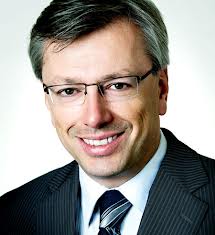
Thanks very much for the invitation, Dave! Here’s my best shot:
We’ll look back at 2016 as a turning point for legal regulation in Canada. “Non-lawyer” ownership of law firms was stymied in 2015, but this year will bring us something profoundly more important: proactive, principle-based, entity regulation of legal services. Starting with Nova Scotia and the Prairie provinces, law societies will shift the regulatory focus away from rules of conduct and lawyer misbehaviour and towards “ethical infrastructure” and enterprise-level responsibility for maintaining and improving a regulatory culture. This will have an enormous influence on how lawyers practice, how law firms manage, how law schools teach and how law societies regulate. ABS would have affected maybe 1 lawyer in 100; entity-based regulation will affect every single lawyer in private practice.
About Jordan:
Jordan Furlong is a leading legal industry analyst who forecasts the impact of the changing legal market on lawyers, clients, and legal organizations. Jordan has addressed dozens of law firms, state bars, law societies, bar executives, law schools, and judges throughout the United States and Canada on the evolution of the legal services market.
Terrance Hudson:

My predictions for family law are as follows:
The Courts will continue to be viewed as a resource of last-resort for those experiencing family law issues; and, mediation, arbitration and other forms of dispute resolution will continue to increase in demand by the public as they are far less destructive to the family and are more economical.
While families may break up, the family dynamic must be maintained. The courts are not set up to handle these types of things as they are based on confrontation principles such as the Rule in Brown v. Dunn. The Courts will continue to be overburdened by those that cannot afford private alternative dispute resolution services and by those who do not want to do the work necessary to help people work out solutions.
In my view, the Legal Services Society should expand its funding of alternative dispute resolution services by increasing funding to mediation, and adding arbitration and parenting coordination services. This would expand the access to these services that are desperately need to reduce the burden on the Courts, to expand access to justice, and provide a more wholistic process for the resolution of disputes. Training needs to continue to be at the high end for those wishing to practice these areas.
The reality is that families are irreparably harmed by trials. While they are necessary in about 5-10% of cases where there is abuse, in most cases they are not required. Lawyers need to be increasingly creative, use alternative dispute resolution methods and avoid trials that can needlessly destroy families.
About Terry:
My interest in family law includes representing clients in the provincial and supreme Court, acting as a mediator and arbitrator, writing articles and doing my best to provide information to the public that is of general interest in a manner that is readily accessible.
The Courts processes are often difficult to understand and navigate and thus, I do my best to provide information to assist those who are unrepresented to seek Justice for themselves. www.hudsonlawyers.ca
Larry Bodine:

Here are my marketing predictions for 2016.
- SEO officially becomes obsolete in 2016, killed off by repeated Google artificial intelligence and algorithm updates.
More blogs = more business. Law firms that don’t adopt content marketing with a frequently-updated blog will gradually fade away, as other web-savvy law firms nip away 2-3 good files per month — like being nibbled to death by ducks. Smart law firms already know that more frequent blogging equals more leads and clients, according to Hubspot. - Social media goes legal. Troglodyte law firms will start to get active in social media, because the more engagement their posts get, particularly on Facebook and Google+, the higher the authority that Google will assign to the website.
- Law firms will start to create non-promotional, single-topic informational sites — like Drugwatch.com (sponsored by the Peterson Firm) or BrainandSpinalCord.org (sponsored by Newsome Melton) — to capture clients early in the decision-making process when they are researching their injury.
- Law firm marketing will be shaped by the way consumers search for an attorney. For example, the top directories for personal injury attorneys are:
- FindLaw.com
- Avvo.com
- Yelp.com – surprise!
- Lawyers.com
- Thumbtack.com – surprise!
- Review sites. Law firms will assign staff and develop systems to methodically get good reviews on imporant sites like Google, Yelp and Lawyers.com. Approximately 83 percent of people check lawyer reviews as the first step to finding an attorney.
About Larry:
Larry Bodine is a marketer, journalist and attorney who knows how to turn website visitors into clients for trial law firms. His team has drafted law firm blog posts for many websites including The National Trial Lawyers, PersonalInjury.com, Martindale-Hubbell, Lawyers.com and LexisNexis. Results include:
He was inducted into the PILMMA Hall of Fame in July 2015.
4 Million consumers read the latest legal news on Lawyers.com over a 12-month period, producing more than 7 Million page views.
The LawMarketing Blog gets 400 visits per day — more than 1 million visits over the last 10 years.
Larry is followed by 23,000 people on Twitter followers, he is in 2,000 Google+ circles, and participates in dozens of LinkedIn groups.
He writes for websites like the Huffington Post, the LexisNexis Business of Law Blog, state bar association websites, LawFuel, and trial law firms.
He is the Editor in Chief of PersonalInjury.com, the leading news site about verdicts and settlements.
Larry updates The National Trial Lawyers website every day with legal news for lawyers.
To get a content review of your website, call Larry today at 520.577.9759.
For Business Development Training for Your Firm, visit bit.ly/BodineTraining.
Buzz Bruggerman:
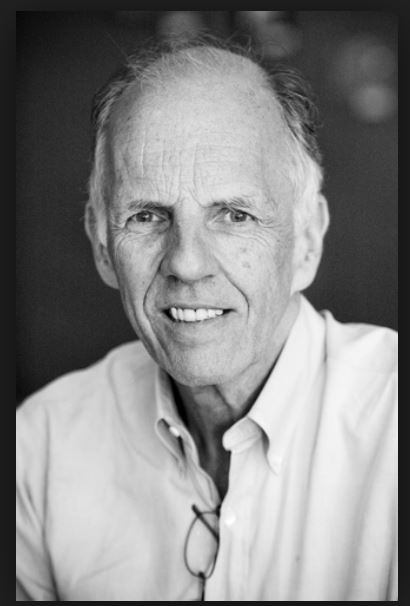
Given the anti-immigrant hysteria here in parts of America, coupled with the madness around gun control, here’s my prediction vis a vis American politics…
I fully expect Hilary Clinton to get the Dem. Nomination, and at the end of the day I expect the Reps to rally around someone like John Kasich. In November 2016, I expect the R’s to win by a hair, and for our country to be plunged into 4 or more years of darkness.
Very depressing prospects, but America is becoming very polarized, and I see nothing that is going to reverse that process in the near term.
About Buzz:
Trying to change the world, and helping to connect great people.
ActiveWords Co-Founder, Tech Evangelist, connector, small town Minnesota boy, Duke grad, and serious Duke basketball fan.
Colin Rule:
![crule at cpr[1]](http://thoughtfullaw.com/wp-content/uploads/2015/12/crule-at-cpr1.jpg)
2016 will be the year of ODR and Consumer Protection. Some folks might remember the conference held in Vancouver in 2010 focused on ODR and Consumers. 2016 will be the year many of the ideas hatched there finally come to fruition. The EU ODR regulation will come live early in the year. The UNCITRAL ODR Working Group will wrap up over the Summer, issuing a position paper from all the delegates calling for high quality cross-border consumer ODR. The OECD Council on Consumer Protection in eCommerce will finalize recommendations calling for quality ODR. Amy Schmitz and I will also publish our book on ODR and Consumer Protection through the American Bar Association. The need for fast and fair redress for consumers is finally coming a head, and the consensus is that ODR is the only path forward. 2016 will be the breakthrough year.
About Colin:
Colin Rule is Co-Founder and COO of Modria.com, an ODR provider based in Silicon Valley. From 2003 to 2011 he was Director of Online Dispute Resolution for eBay and PayPal. He has worked in the dispute resolution field for more than a decade as a mediator, trainer, and consultant. He is currently Co-Chair of the Advisory Board of the National Center for Technology and Dispute Resolution at UMass-Amherst and a Non-Resident Fellow at the Gould Center for Conflict Resolution at Stanford Law School.
Colin co-founded Online Resolution, one of the first online dispute resolution (ODR) providers, in 1999 and served as its CEO (2000) and President. In 2002 Colin co-founded the Online Public Disputes Project (now eDeliberation.com) which applies ODR to multiparty, public disputes. Previously, Colin was General Manager of Mediate.com, the largest online resource for the dispute resolution field. Colin also worked for several years with the National Institute for Dispute Resolution (now ACR) in Washington, D.C. and the Consensus Building Institute in Cambridge, MA.
Colin has presented and trained throughout Europe and North America for organizations including the Federal Mediation and Conciliation Service, the Department of State, the International Chamber of Commerce, and the CPR Institute for Dispute Resolution. He has also lectured and taught at UMass-Amherst, Stanford, MIT, Pepperdine University, Creighton University, Southern Methodist University, the University of Ottawa, and Brandeis University.
Colin is the author of Online Dispute Resolution for Business, published by Jossey-Bass in September 2002. He has contributed more than 50 articles to prestigious ADR publications such as Consensus, The Fourth R, ACResolution Magazine, and Peace Review. He serves on the boards of the Consensus Building Institute and the PeaceTech Lab at the United States Institute of Peace. He holds a Master’s degree from Harvard University’s Kennedy School of Government in conflict resolution and technology, a graduate certificate in dispute resolution from UMass-Boston, a B.A. from Haverford College, and he served as a Peace Corps volunteer in Eritrea from 1995-1997.
Ellen Freedman:

The perfect storm has arrived. I (and other PMAs – Practice Management Advisors) predicated it’s arrival long before the recession hit. Thanks to the layoffs and freezes on hiring during the recession, the storm was temporarily delayed in arriving. Now that the legal industry sluggishly pulls out of the pit many firms fell into, the storm effects are clearly being felt.
The perfect storm I am referring to is the shortage of available law firm personnel suited to the positions open. Primarily we are hearing the first desperate pleas for help from firms located in rural and suburban areas. Whether the opening involves a legal assistant, legal secretary, bookkeeper, paralegal or courthouse runner, or any other administrative position, firms are struggling harder than ever to find suitable candidates.
The perfect storm has been created by a convergence of many factors:
- Accelerating rate of retirement of the “old guard” of experienced legal secretaries, estate administrators, and so forth.
- Lowered quality of available entry level candidates – many of whom lack the most basic skills in reading, writing, spelling, grammar and proofreading.
- Law firm’s inability and unwillingness to train, accompanied by increasing complexity of even the simplest positions.
- Increasing move of candidates entering the workforce toward higher positions than before, which in turn tends to increase demand for administrative support even further.
- Diminished regard for administrative positions by potential employment candidates.
- Increased competition with other industries which provide advancement opportunities not available in the legal industry
- A smaller workforce demographically, despite dual-career households as the new normal.
Professionals are included. As firms seek to start regrowing their firm’s associate ranks from the bottom, the average law firm struggles to find the combination of work ethic and abilities necessary to join what is essentially still a mostly sink-or-swim environment. Firms with brand names or profitable boutique practices continue to entice the best and brightest candidates. The rest of the firms scramble over the remaining candidates. General practices in rural areas risk dying due to lack of talent for succession purposes, rather than lack of demand for services.
About Ellen:
Ellen serves as the Law Practice Management Coordinator for the Pennsylvania Bar Association. In that capacity she assists PBA’s members with management issues and decisions on the business side of their practice, including areas like technology, financial management and profitability, human resources, marketing, risk management, setting up a practice and so forth. PBA members are encouraged to contact Ellen through the 800 “Hot Line” at PBA headquarters, (800-932-0311 x2228) or through email (lawpractice@pabar.org).
Ellen is founder and President of Freedman Consulting, which assists PA law firms with a full range of issues and projects on the business side of the practice. More information about Ellen and her law practice management services may be obtained at http:www.FreedmanLPM.com. Ellen also publishes the Law Practice Management blog at www.PA-LawPracticeManagement.com.
Ellen holds the designation of Certified Legal Manager through the Association of Legal Administrators (ALA), the credentialing body for the CLM degree. Of the 11,000+ members of the ALA, approximately 260 are certified legal managers. Ellen was one of the first 20 in the nation to have achieved this designation. She holds a Certification in Computer Programming from Maxwell Institute, and a Certification in Web Site Design and a B.A. from Temple University.
Ellen managed inside law firms for twenty years. Most of that time was spent in a mid-size (35+ attorney) firm environment. She launched her consulting practice in 1998, and joined the Pennsylvania Bar Association in 1999.
Ellen is an associate member of the American Bar Association, and its Law Practice Management and General Practice & Small Firm sections. She was a member of the Association of Legal Administrators for over 20 years, and founded the Independence Chapter. She is a frequent author and speaker on law firm management issues on a national level.
That is it for Part I – stay tuned for Parts II and III – So you gotta hang on ’til tomorrow, come what may…!!!
♫ Get a leg up
What’s the matter
Are you shy, shy, shy? ♫
Lyrics, music and recorded by: John Mellencamp.
In an article entitled: 5 Rules for When to Listen to Advice (And When Not To) in Inc. Magazine, Matthew Swyers, the Founder of The Trademark Company
 stated (here I am just going to summarize) the rules as to determine if advice is worth anything:
- Context: Determine the weight to be given to advice from the context in which it is given.
- Unsolicited Advice: Determine why someone is giving you advice.
- Motivation: What is the person seeking who is giving you advice? Matthew says, “What is their end game?”
- Knowledge: How reliable is the advice that you have been given?
- Experience: What experience does this person have relative to the advice that they are giving?
All this is to put the following advice in context. Peter Legge, O.B.C, CSP, CPAE, HoF, LLD (Hon)
 is an author, a very successful businessman, a community leader and an incredible presenter. I went to one of his presentations years ago and just rediscovered his handout: a publication entitled “97 Tips: Doing Business in Tough Times, Proven Strategies that Work“. Since the U.S. Federal Reserve raised interest rates slightly on Wednesday, which I understand is bad news for the Canadian dollar and economy, I thought it was appropriate to post some of his 97 tips here that deal with leadership and personal conviction. Full disclosure: I went up to Peter after his presentation and asked if I could republish, with attribution, some of his tips and he agreed. I assume that this approval and consent has not expired with the passage of time. After all, Peter’s advice is timeless:
- Be positive. You become what you think about. If you refuse to accept failure and if you think like a winner, you will be one.
- Be decisive. Take action. Nothing kills a good idea or an opportunity faster than procrastination. Survey the options, make the call, move on it, and never 2nd-guess yourself. There’s nothing to be gained from regret.
- Achieve. Do not try hard, do not make excuses. Do what needs to be done. “Sometimes you have to do your best, but sometimes you have to do what is required,” said Winston Churchill. This is the time to execute with conviction.
- Know what’s important. No matter what kind of challenge you find yourself up against, always face it with absolute clarity. Be specific about what you want to accomplish and be sure you are perfectly clear on what’s most important.
- Don’t be afraid. Remember, everyone around you has fears, phobias and doubts. Rise above your worries. Think about the example set by New York Mayor Rudolph Giuliani on September 11. The people around you are losing their cool, show them that you are not afraid. Face your fear and do it anyway.
- Stay true. These may be tough times indeed, but when it comes down to it, nothing has really changed. It still all about doing business the best that you can. So, stay focused on your organization’s mission, stick to your core values and don’t waver from your goals. Stick to your knitting.
- Be unforgettable. When clients are looking for a product or service, make sure they think of you first. Be appreciative, considerate, courageous, positive-thinking and excited.
- Small can be beautiful. Don’t let yourself get too big for your britches. Successful small business is infinitely preferable to a big business that has been marginalized by undisciplined growth. Grow when you’re ready.
- Handwrite thank-you cards. Write 5 thank you notes daily. Don’t think people via email. Handwritten notes have become a rarity. Send personal greetings for important occasions as well as lesser ones.
- Take time to think. Slow down. Don’t be rushed or pushed into making the wrong decision. Look out the window and take 30 minutes a day to think about your challenges. Your decisions will be much better in the long-run.
- Be thoughtful and courteous. Courtesy is a hallmark of a distinctive approach to business. People are drawn to doing business with the people they like and who treat them well.
- Be kind. People will forget what you said. The will forget what you did. But they will never forget how you made them feel. Learn how to listen. Be sensitive to the needs and expectations of people.
- Make yourself heard. Marketing costs are often the 1st expenditure to be cut when money gets tight. But this is the time when you actually need to increase your marketing efforts, not cut them. After all, if your competitors stop advertising while you continue to trumpet your own business, guess who’s message customers will notice?
Thank you Peter in helping all of us keep a clear head, set our compass and take your advice on how to get a leg up and not be shy!
(p.s. If you want to get the rest of Peter’s tips, you should be able to order them from Peter Legge Management Co. Ltd at 604 299 9188.)
(jointly published on tips.slaw.ca)
♫ I can see clearly now the rain is gone.
I can see all obstacles in my way.
Gone are the dark clouds that had me blind.
It’s gonna be a bright (bright)
bright (bright) sunshiny day…♫
Lyrics and music by Johnny Nash, recorded by Jimmy Cliff.

This is the time of the year when I call for our gentle readers to submit their ideas for what 2016 will hold for the legal community.
Whether it is a bright future or perhaps a guarded cloudy one, I would love to hear from you. Whether it is on legal software, access to justice, online dispute resolution, alternative business structures, changes in legal regulations, business development, legal marketing change management, firm governance, moving to paperless or moving to Mac (or back to Windows), quality of life, tips and trends …all these topics and more are on the table.
Results will be posted in a series of articles near the end of December.
So put your thinking cap on and let’s see what we can to together to write the future!
♫ The wheels on the bus go round and round,
round and round,
round and round.
The wheels on the bus go round and round,
all through the town…♫
Lyrics and music by: Lydia Ulsaker, sung by teachers, parents and children everywhere.

(image by: LaurMG, used under the Creative Commons Attribution-Share Alike 3.0 Unported license.)
James C. Collins wrote the best seller: “Good to Great: Why Some Companies Make the Leap…and Other’s Don’t.” It has stood the test of time and sold over 4 million copies according to Wikipedia.
Jim has some very good advice that is contained in his seven characteristics of companies that went from good to great. For this column I am only going to deal with the first:
First Who, Then What: Get the right people on the bus, then figure out where to go. This is all about finding the right people and trying them out in different positions.
Of course to get the right people on the bus, you have to find out who may be the wrong people on the bus that perhaps have to get off.
Well that is all well and good if you are in a management role and have the authority to ask someone to politely get off the bus. What if you are a fellow rider and have to work with someone who should have been asked to get off a long time ago but for one reason or another, is still on the bus. Now what?
Forbes.com published Kevin Kruse’s article “Dealing with Difficult People”. The full article can be found here, but I am just going to summarize his excellent advice:
- Don’t get dragged down. Don’t get sucked into their world of negativity.
- Listen. Use good listening techniques. They think no one is listening to them.
- Use a time for venting. Let the Downer vent for 5 minutes. Then move on.
- Don’t agree. Appeasing them only adds fuel to the fire.
- Don’t stay silent. Silence will be interpreted as agreement.
- Do switch extremes into facts. Switch them to fact-based statements.
- Move to problem solving. Help them move to a problem-solving mode.
- Cut them off. Nothing worked? Then politely shut them down.
You want to enjoy the company of those with whom you work while the wheels on the bus go round and round.
(published concurrently on slaw.tips.ca)
♫ Giving my all to you (Yes, I will)
Nothing else will do (Nothing else will do, I’ll be)
Giving my all to you today (You today)…♫
Lyrics and music by: Herman Randall Davis, recorded by Johnny Gill.

I am duly honoured to be named to the Board of Directors of the Sport Dispute Resolution Centre of Canada for a 3 year term.
http://www.crdsc-sdrcc.ca/…/2015-12-01%20-%20New%20Board%20…
The SDRCC is a not-for-profit corporation created by federal legislation and funded by the Government of Canada. The mission of the SDRCC is to provide the sport community with a national alternative dispute resolution service and strengthen the culture of fairness in Canadian sport by resolving disputes quickly and efficiently and to provide expertise and assistance regarding alternative dispute resolution.
According to David de Vlieger, Chair of the Board of Directors of the SDRCC, I am joining “a team determined to bring the SDRCC to the forefront of alternative dispute resolution in sport, in Canada and abroad.”
It will be a most interesting and engaging challenge to continue the leadership role that the SDRCC has crafted by applying technology and legal dispute resolution to the sport community in Canada to help prevent and resolve disputes at the highest levels of the Canadian sport system. I look forward to working with David de Vlieger, Marie-Claude Asselin, Chief Executive Officer and the rest of the Board and staff at the SDRCC.
One thing is certain. I will be giving this new appointment my all – nothing else will do.